The scorching Arizona sun wasn't just a backdrop; it was a challenge. As a 60-something desert dweller who cherishes year-round camping, I hit a wall when temperatures soared past 100°F and nights stayed above 90°F. My trusty evaporative cooler, a godsend in dry heat, became useless in the slightest humidity. My solar setup, perfect for most days, simply couldn't power a rooftop air conditioner for extended periods. That's when I, like many others, turned to Honda EU2000 User Reviews & FAQs to find a portable generator solution that could truly deliver.
This isn't just about buying a gadget; it's about investing in comfort, reliability, and peace of mind when you're off the grid. If you're considering a Honda EU series generator, whether it's the classic EU2000i or its newer sibling, the EU2200i, you're looking for real-world answers. Here's what you need to know.
At a Glance: Key Takeaways on Honda EU Series Generators
- Reliability Reigns: Honda (and Yamaha) generators consistently top the charts for durability and performance, backed by a robust 3-year warranty and extensive dealer network.
- Size Matters (But Not Always How You Think): Always consider an air conditioner's starting watts, which are significantly higher than its running watts. A 2,000-watt generator is often insufficient for a standard RV A/C without special modifications.
- Parallel Power is a Game-Changer: For higher power needs like an RV air conditioner, two smaller, lighter generators running in parallel offer more flexibility and manageable weight than a single large unit.
- Quiet Operation is Key: Inverter technology and ECO THROTTLE modes make Honda EU generators remarkably quiet, a huge benefit for campsites and neighborhoods.
- Security is Paramount: These generators are a target for theft. Invest in strong cables, quality locks, and consider theft-deterrent handle brackets.
- California's Changing Landscape: New gasoline generator sales will be banned in California starting 2028, impacting future purchases in the state.
The Quest for Cool: Why a Generator Became Essential
My love for desert camping means chasing open spaces and solitude, often far from hookups. For years, my RV's solar system handled all my power needs, from lights to fans to charging devices. But extreme heat introduced a new challenge: how to run a 13,500 BTU rooftop air conditioner, especially when the sun wasn't shining, or my batteries were drained?
The answer, I quickly realized, lay in a portable generator. But not just any generator. It needed to be efficient, dependable, and capable of handling the demanding surge of an air conditioner. My research, fueled by countless Honda EU2000 User Reviews & FAQs, began with a critical look at what truly matters.
Choosing Your Powerhouse: Key Considerations Beyond the Hype
Selecting the right generator for off-grid living, especially when powering sensitive electronics or high-draw appliances like an A/C, comes down to four core criteria: size, durability, weight, and noise.
Wattage Wisdom: Decoding Your Power Needs
This is arguably the most crucial decision. Generators are rated by starting watts, which is the initial surge of power needed to kick-start a motor, and continuous running watts. That starting power can be substantially higher.
Take my 13,500 BTU air conditioner, for example. It demands a minimum of 3,000 watts to start. While some claim a 2,000-watt generator might start a 13.5K A/C with a "hard start capacitor" and at very low altitudes, this is a risky gamble. It pushes both the A/C compressor and the generator to their absolute limits, potentially causing damage or premature failure. Honda even provides a handy wattage calculator on their site to help you accurately determine your needs. For my purposes, I knew I needed a significant power margin.
Built to Last: Honda's Legacy of Reliability
When you're miles from civilization, "durable and reliable" isn't a marketing slogan; it's a lifeline. This is where brands like Honda and Yamaha distinguish themselves. Honda, in particular, has a rich history of innovation, launching their first portable generator in 1965, the first inverter generator in 1998, and the iconic EU2000i in 1999. This pedigree translates to proven engineering and consistent performance.
Furthermore, Honda boasts a vast dealer network, making warranty service and parts readily available. This is a stark contrast to many off-brand generators, which, while cheaper upfront, often come with non-existent service networks or unreliable warranty support. I've heard too many stories of retailers refusing service post-purchase without extra cost, turning a "deal" into a headache. Honda generators, with their 3-year warranty, offer true peace of mind.
Weighty Decisions: Portability vs. Power
For anyone who needs to load and unload their generator regularly, weight is a major factor. Generators in the 2,000-2,500 watt range typically weigh under 50 lbs, making them relatively easy for one person to handle.
However, once you jump to the 3,000-watt mark, portability plummets. A Honda EU3000iS, for instance, tips the scales at 131 lbs – a two-person job at best, and a bulky beast to maneuver. This led me to a critical realization: instead of one heavy generator, two smaller, lighter generators operating in parallel could provide the necessary power with far greater flexibility and ease of transport.
Silence is Golden: Understanding Generator Noise
Noise pollution is a common complaint at campsites and even among neighbors. Generator noise is measured in decibels (dB), a logarithmic scale. This means 60 dB isn't just a little louder than 50 dB; it's ten times louder. And if you run two generators at 55 dB each, the combined noise level is only slightly higher, around 58 dB – a 3 dB increase.
This is where inverter generators, like the Honda EU series, shine. Their advanced technology allows them to produce clean, stable power, making them safe for sensitive electronics. Crucially, they feature an "ECO THROTTLE" mode that automatically adjusts engine speed to match the load. This not only significantly reduces noise levels but also improves fuel economy. Honda typically measures noise levels at 7 meters (23 feet) away, a standard you should keep in mind when comparing models.
My Real-World Setup: Two Hondas Are Better Than One
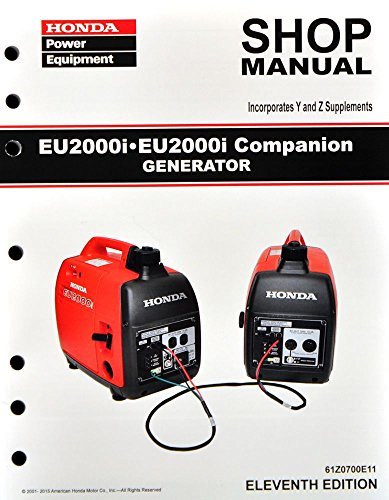
After weighing all these factors, I made my decision: two Honda inverter generators for parallel operation. Specifically, I acquired an EU2200i (rated at 2,200 starting watts) and an EU2000i Companion (2,000 starting watts). This setup provides a combined total of 4,200 starting watts and 3,400 running watts.
Why this specific combination? While the EU2200i effectively replaced the venerable EU2000i, I found a great sale on the EU2200i. Pairing it with the EU2000i Companion, which features a dedicated 30 amp RV plug, gave me the ideal balance of power, weight, and convenience. This configuration offers ample power margin for my 13,500 BTU A/C and other appliances, leading to lower fuel consumption and significantly reduced noise levels since neither generator is constantly running at full tilt. This flexibility is a huge advantage for anyone looking for serious portable power, and it's something you'll find echoed in many Honda EU2000 generator guide.
Under the Hood: Key Features of the Honda EU Series
Both the EU2000i and EU2200i, along with their Companion versions, share many core technologies that make them favorites among users. However, the newer EU2200i introduced some thoughtful improvements.
Engine Switch Innovations
One notable upgrade on the EU2200i is its three-position engine switch: On, Fuel Off, and Off. The "Fuel Off" position is particularly useful for storage. It allows the generator to run until the carburetor is completely dry, preventing stale fuel from gumming up the system – a common issue with small engines. While it doesn't drain the fuel pump or tank, it's a significant step towards easier long-term storage compared to the EU2000i's simpler On/Off switch.
Intuitive Control Panels
Both models feature identical, user-friendly control panels. These include:
- ECO THROTTLE Switch: This critical feature allows the generator to adjust engine speed to match the load, saving fuel and dramatically reducing noise. Always engage it for optimal performance unless you need maximum, consistent power.
- Oil Alert Indicator (Red): This light illuminates and automatically shuts down the generator if the oil level drops too low, preventing costly engine damage.
- Overload Alarm Indicator (Red): If an appliance draws too much power, this light comes on, and power to the receptacles is cut, protecting both the generator and your electronics.
- Output Indicator (Green): A simple green light confirming the generator is running properly and producing power.
Versatile Receptacles
The EU2200i comes with two standard AC receptacles (max 2,200 watts startup, 1,800 continuous, 15 amps). Both the EU2200i and EU2000i have outlets for parallel operation, though you'll need an optional Honda Parallel kit to link them. Additionally, there's a 12V DC, 8.3 amp battery charging receptacle, requiring an optional cable to connect to your battery. The EU2000i Companion, specifically designed for parallel use, also includes a dedicated 30 amp RV plug, making it incredibly convenient for connecting to your RV's shore power inlet.
Life with the Hondas: Performance & Practicality
My real-world experience with this dual-generator setup has been nothing short of impressive. After their initial fueling, both generators consistently started on the first pull – a testament to Honda's reliable engineering.
Each generator holds 0.95 gallons of fuel. On one particularly hot night, I ran my 13,500 BTU A/C continuously for 7 hours, keeping my camper at a comfortable 76°F. By morning, both generators were nearly out of fuel, but they hadn't skipped a beat. The noise level, even with two units running next to my bedroom, was surprisingly minimal, especially with the ECO THROTTLE engaged. It was a low hum, easily faded into the background, allowing for a peaceful night's sleep in otherwise unbearable heat.
Beyond the Purchase: Essential Tips for Honda Generator Owners
Owning a Honda EU series generator is an investment. Here's how to maximize its value and protect it.
Security Smarts: Protecting Your Investment
Unfortunately, Honda generators are high-value targets for theft. I learned this early on and implemented robust security measures. I use two ½-inch braided steel cables with high-quality padlocks to secure each generator to my trailer frame. When leaving camp for extended periods, I either load them into my SUV or ensure they're locked down incredibly well.
Consider investing in aftermarket theft deterrent handle brackets. The plastic handles, while convenient, can be easily cut, allowing thieves to walk away with your valuable equipment. A little foresight here can save you a lot of heartache and expense.
When to Use It: Balancing Solar & Generator Power
For me, these generators are primarily for extreme conditions. My solar system remains the workhorse for most trips, quietly powering my essentials. The Hondas are my strategic reserve, deployed only when the heat becomes oppressive, or extended cloud cover renders solar insufficient. This approach minimizes fuel consumption, reduces overall noise impact, and ensures my primary power source remains clean and renewable. It's about having the right tool for the job, rather than relying on one solution for every scenario.
Common Questions & Answers About Honda EU Generators (FAQs)
Here are direct answers to some of the most frequent questions people have about the Honda EU series generators, informed by extensive user feedback and my own experience.
Can a 2000-watt generator run a 13,500 BTU A/C?
Generally, no, not reliably and safely without significant modification. A 13,500 BTU A/C typically requires at least 3,000 starting watts. While some users report success with a "hard start capacitor" on their A/C, this pushes both units to their limits and can lead to premature wear or damage. For consistent A/C operation, you'll need a generator rated for 3,000+ watts or two smaller generators operating in parallel, providing the necessary surge power.
What's the difference between the EU2000i and EU2200i?
The EU2200i is the successor to the EU2000i, offering a modest power bump (200 extra watts, to 2,200 starting watts) and several key enhancements. These include a new engine switch with a "Fuel Off" position for easier carburetor draining, a larger oil fill opening, improved ventilation, and a more robust cooling fan. Both are excellent, but the EU2200i represents an evolution in design and user convenience.
How loud are Honda EU series generators?
Honda EU series generators are among the quietest portable generators available, largely due to their inverter technology and ECO THROTTLE mode. The EU2200i, for example, is rated at 48 to 57 dB(A), depending on the load. To put this in perspective, 50 dB is roughly equivalent to a quiet conversation or refrigerator hum. With ECO THROTTLE enabled, they're often barely noticeable from a short distance, making them ideal for camping and residential use where noise is a concern.
What is parallel operation, and how does it work?
Parallel operation allows you to link two compatible Honda EU series generators (e.g., an EU2200i and an EU2000i Companion) together using a special parallel cable kit. This effectively doubles their power output, providing higher wattage for demanding appliances like RV air conditioners, while maintaining the portability of individual units. You can connect a standard 120V AC cord or, with the Companion model, utilize its dedicated 30 amp RV receptacle.
Are Honda generators worth the extra cost?
Absolutely. The adage "you get what you pay for" holds especially true in the generator market. While cheaper, off-brand units might seem appealing, they often fall short in terms of reliability, fuel efficiency, quiet operation, and crucially, long-term support. Honda's proven durability, extensive dealer network, 3-year warranty, and advanced inverter technology translate to fewer headaches, lower operating costs over time, and consistent performance when you need it most. It's an investment in reliable power.
What about California's new generator regulations?
As of December 14, 2023, the California Air Resources Board (CARB) has enacted new regulations banning the sale of new gasoline-powered generators in California starting in 2028. Existing owners can continue to use their generators, but new purchases will be limited to zero-emission alternatives. Honda has already ceased selling these models in California in anticipation of these regulations. If you're in California, be aware of these upcoming changes.
Final Thoughts: Investing in Reliable Power
My journey to finding the perfect generator solution for my desert adventures led me straight to the Honda EU series. The insights gleaned from countless Honda EU2000 User Reviews & FAQs were invaluable, and my personal experience has only reinforced the sentiment: these generators are a premium investment that delivers consistent, quiet, and reliable power.
Whether you're battling extreme heat, seeking quiet power for remote work, or simply need a dependable backup, the Honda EU series provides the performance you need without compromise. Choose wisely, secure your investment, and enjoy the freedom of truly portable power.